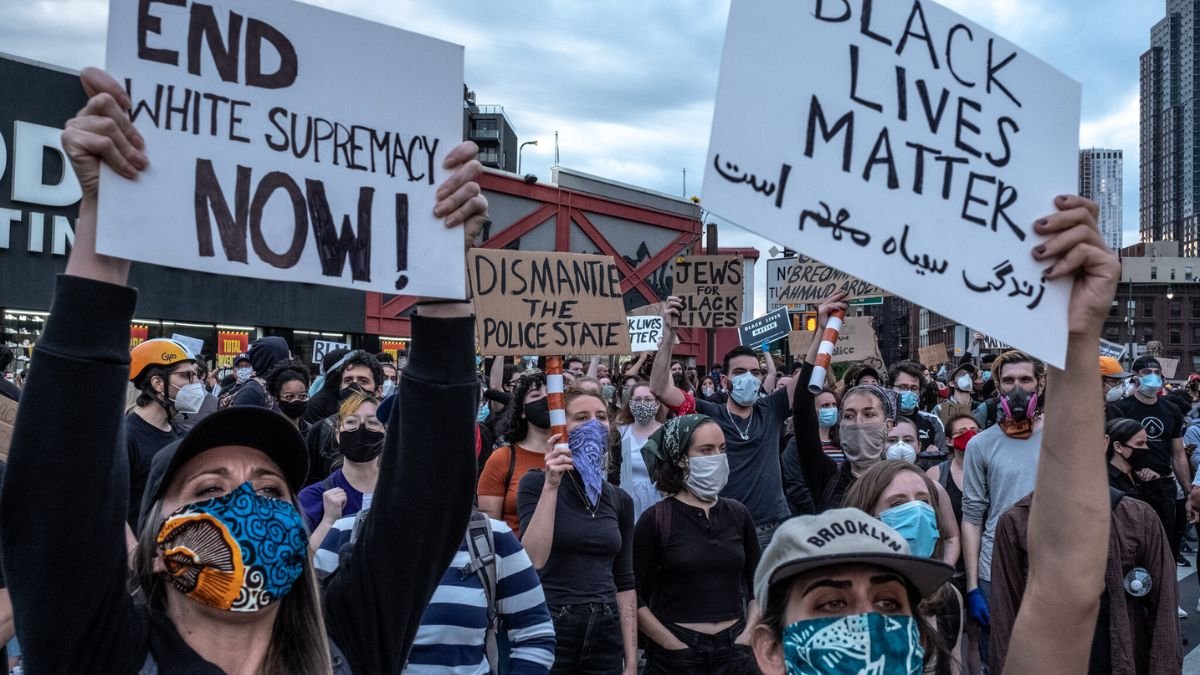
When discussing racism or social inequality, the terms White Supremacy and Racism are often used interchangeably. Many people believe they are the same thing, while in reality, their meanings and scope are distinct. Racism is a broad social problem, while White Supremacy is a specific and more organized form of racism. Understanding the difference between the two is crucial so that we can recognize that inequality is not merely the result of individual attitudes, but often the product of an entire ideology and system.
This confusion arises because both are related to racial inequality, but their mechanisms and effects manifest at different levels.
What is Racism: A Broad Social Problem
Racism means considering an individual or group inferior or superior based on their race, skin color, or ethnic identity. It can exist in three forms: individual attitudes, behaviors, and social norms. If a person holds negative stereotypes about people of a particular race or treats them differently, that is an example of racism.
However, racism is not limited to individual hatred. It is also evident in institutions such as schools, workplaces, housing, laws, and healthcare services. Often, people don’t consider themselves racist, yet they are part of systems that disadvantage certain communities. Therefore, it is essential to understand racism as a social and structural problem.
What is White Supremacy: An Ideology and System of Power
White Supremacy is not just an individual’s belief, but an organized ideology. Its core belief is that white people are inherently superior and should have political, social, and economic power. This ideology has been reinforced throughout history through slavery, colonialism, and racist laws.
White Supremacy is not limited to openly hateful groups. It can also exist within social structures that consider the white community as the norm and standard, while marginalizing other races as “the other.” This is why white supremacy can operate even without overt racist statements.
The main difference: Ideology vs. Power
The biggest difference between racism and white supremacy is power. Racism can be perpetrated by anyone against any race, but white supremacy is linked to the race that has historically and socially held power.
Racism can be individual or limited in scope, while white supremacy is a system that perpetuates itself through institutions, policies, and cultural norms. Simply put, racism can be a behavior, but white supremacy is an entire system.
Examples of Racism in Everyday Life
Racism manifests in many subtle ways in everyday life. Assuming someone is less intelligent because of their race, or avoiding a particular community—these are examples of individual racism. This can often happen unintentionally, as pre-existing societal biases influence people’s thinking.
These examples don’t necessarily involve a grand ideology, but they still have a significant impact on the individual or community experiencing the discrimination.
Everyday Manifestations of White Supremacy
White supremacy doesn’t always present itself in violent or extremist forms. Often, it’s hidden within seemingly normal and “neutral” rules and traditions. For example, assuming that white culture is the mainstream, or believing that the presence of white people in positions of power is natural.
This thinking is reflected in the education system, media, and workplaces, shaping perceptions of who is “normal” and who is “different.” This discrimination often occurs without any overt intent, but its consequences are profound.
Is all racism white supremacy?
This question often arises, and the answer is no. Not all racist behavior constitutes white supremacy. Any individual can hold prejudices against another race, but white supremacy occurs when that ideology shapes society through power and institutions. White supremacy is the most powerful form of racism because it is supported by history, laws, and resources. This is why its effects are so long-lasting.
The Role of History: Why and How Did the Distinction Emerge?
History has clarified the distinction between racism and white supremacy. In America and Europe, racial theories were created to maintain white people in positions of power. Slavery and colonialism legitimized white supremacy, while racism gained social acceptance.
This history continues to influence the present. Therefore, it is difficult to understand the roots of racial inequality without understanding white supremacy.
Why is it Important to Understand These Two Concepts Separately?
If we treat racism and white supremacy as the same thing, we fail to grasp the depth of the problem. Viewing racism solely as a matter of individual morality obscures the role of systemic factors. Recognizing white supremacy makes it clear that inequality is not just a matter of individual attitudes, but also a problem of power.
This understanding forces us to consider that change will come not only from changing people’s hearts, but also from changing policies and structures.
The Path Forward: How to Move Ahead?
Fighting racism requires individual awareness, but challenging white supremacy demands systemic change. Inclusivity in education, diverse representation in the media, and equal opportunities in policies—these are all crucial steps.
Only when we recognize these two problems as distinct can we find the right solutions for each.
Conclusion: Understanding the difference is the first step
“White Supremacy vs. Racism: Key Differences Explained” teaches us that while racism and white supremacy may appear similar, they operate differently. Racism can be an individual’s belief, while white supremacy is a system deeply embedded in the fabric of society.
Understanding the distinction between the two is the first step towards a more equitable, just, and aware society.