
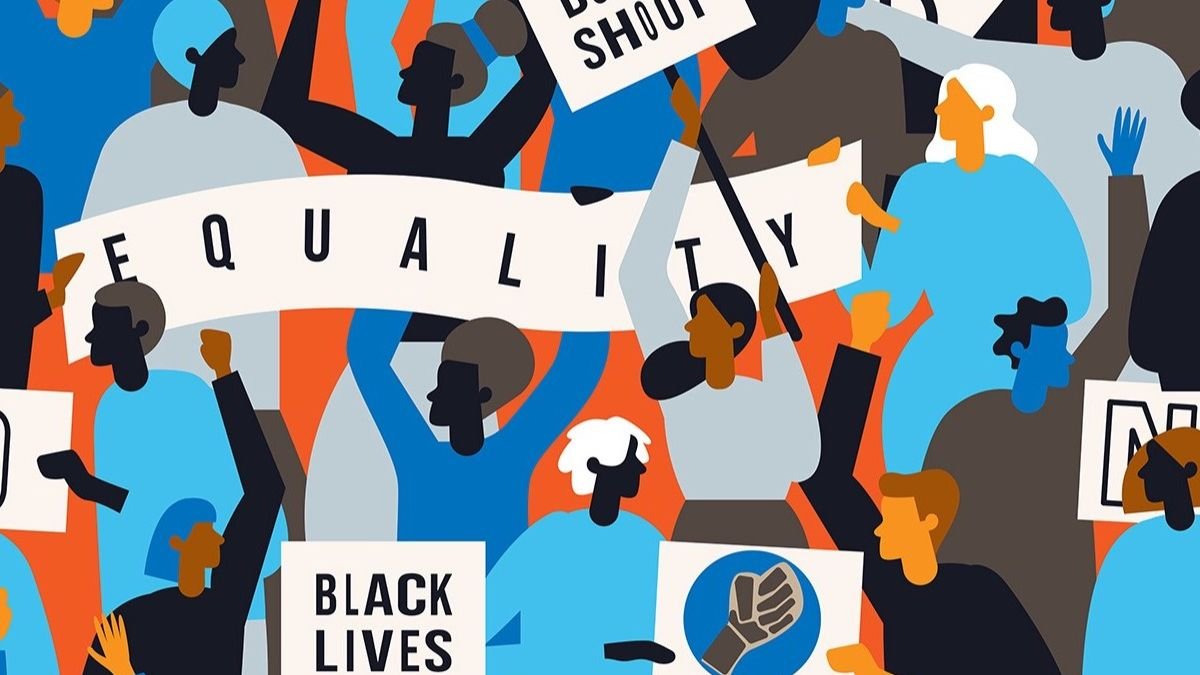
Education is often considered the greatest equalizer in society. It is said that if everyone has equal access to education, every child can thrive according to their potential. However, the reality is that today’s education system is far from equitable. Racism, particularly in its systemic form, deeply impacts education systems. This impact is not limited to the curriculum taught in the classroom but extends to the quality of schools, the availability of resources, teachers’ expectations, and students’ future opportunities.
It is crucial to understand that racial inequality in education is not the fault of any single teacher or student, but rather the result of long-standing social and institutional structures.
Historical Background: The Foundation of Unequal Education
The inequalities visible in today’s education system did not appear overnight. Historically, in many countries, particularly in the United States and Europe, schools were segregated based on race. Better schools were established for some communities, while others were deliberately under-resourced. Even though legal segregation has ended, the effects of those policies still linger.
Communities that were deprived of quality education for generations continue to experience the consequences of that disadvantage. This history is evident in current school funding, curriculum, and opportunities.
Racial Disparities in School Funding and Resources
Even today, many education systems rely on local property taxes or regional income for school funding. This directly results in schools in historically marginalized racial communities receiving less funding. Consequently, these schools often have older buildings, fewer teachers, limited technology, and fewer extracurricular activities.
In contrast, schools in more affluent and often predominantly white areas have better facilities. This disparity places children at an unequal starting point, undermining education’s goal of providing equal opportunities.
Racism Within the Classroom: Expectations and Behavior
Racism operates not only within the structure of the school but also within the classroom itself. Several studies show that teachers unconsciously hold higher expectations for some students and lower expectations for others. Due to racial bias, some students are perceived as “less capable,” while others are considered “naturally intelligent.”
This behavior profoundly impacts students’ self-confidence and performance. When a child repeatedly receives signals that less is expected of them, they begin to doubt their own abilities. In this way, racism subtly shapes children’s futures.
Curriculum and Lack of Representation
A significant aspect of racism in education is linked to the curriculum. In many countries, the history and literature taught are primarily written from a single perspective. The experiences, contributions, and struggles of minority communities are either presented in a very limited way or are completely absent.
When students don’t see people like themselves represented in books, they feel that their stories are less important. This lack of representation not only weakens their sense of identity but also reveals who society considers “mainstream.”
Racial Disparities in Discipline and Punishment
Racism is also evident in disciplinary matters in schools. In many places, it has been observed that students from certain racial groups receive harsher punishments for minor infractions, while others are let off with a warning. This disparity stems not from personal animosity but from pre-existing biases.
Such unequal punishments can alienate students from education and limit their future opportunities. This is often referred to as the “school-to-prison pipeline,” where the education system itself pushes students toward the criminal justice system.
Access to Higher Education and Opportunities
The impact of racism is not limited to primary and secondary education but is also clearly visible in higher education. College admissions, scholarships, and networking opportunities are not equally available. Students whose families already have connections to education and resources have a significant advantage. This inequality is not simply a matter of talent, but rather the result of the social capital that some communities possess and others do not.
The Challenge of Language, Culture, and Identity
In many education systems, a single language and culture are considered the norm. Students who deviate from this norm are often viewed as a “problem.” Their language, accent, or cultural background is seen as something to be corrected, rather than as an asset.
This attitude undermines students’ identities and sends them the message that they must change themselves to succeed.
The Psychological and Emotional Impact of Racism
Racism in education affects not only academic performance but also students’ mental health. Constant discrimination, low expectations, and a lack of representation can lead to stress, anxiety, and feelings of isolation.
When the educational environment is not safe and respectful, the learning process is compromised. These effects can be long-lasting.
The Path Forward: How Can We Improve the Education System?
To eliminate racism in education, it’s not enough to simply say, “We are all equal.” Concrete steps must be taken. Equalizing school funding, developing inclusive curricula, training teachers to recognize bias, and providing students with a safe environment—these are all essential steps.
Furthermore, community involvement and policy-level reforms are necessary to ensure that education truly becomes a vehicle for equal opportunity.
Conclusion: A Crucial Step Towards Equitable Education
The article “How Racism Affects Education Systems Today” helps us understand that the education system is not separate from society. If there is inequality in society, its effects will be visible in schools and colleges. Racism is not merely an individual attitude, but a systemic structure that impacts every level of education.
Only when we acknowledge this reality and take steps towards change can education truly become a means of opportunity and empowerment for all.