
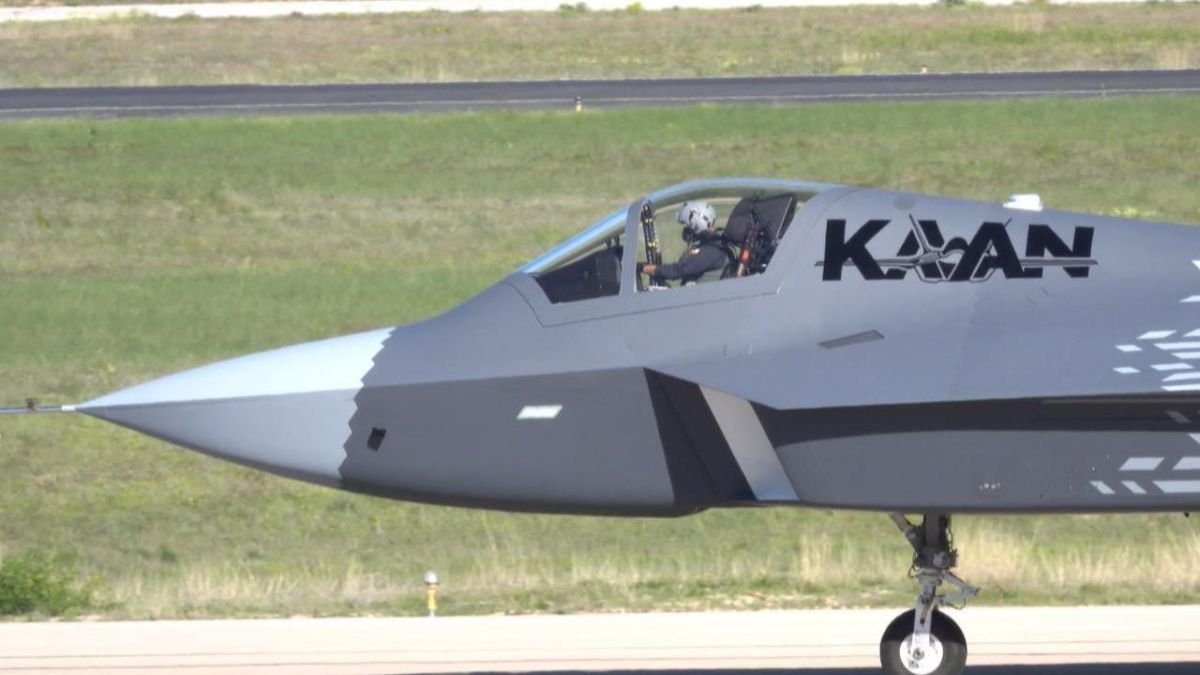
Turkey shocks France! When a sleek, modern Turkish prototype slowly taxied onto the hot runway of Saudi Arabia’s capital, Riyadh, it wasn’t just a test flight. It signaled the shifting balance of global air power. Once considered a new player in drone technology, Turkey has quietly become a serious contender in the aerospace world. Its new strategy directly challenges a high-tech field previously pioneered by powers like France and the United States—fifth-generation fighter jets that work in conjunction with autonomous combat drones.
Turkey’s initiative isn’t just about developing a new fighter jet, but a major step toward reimagining future warfare. Battles will no longer rely solely on the capabilities of the pilot and his aircraft, but on the combined decision-making of man and machine.
Kaan: Preparing to Enter the Fifth-Generation Club
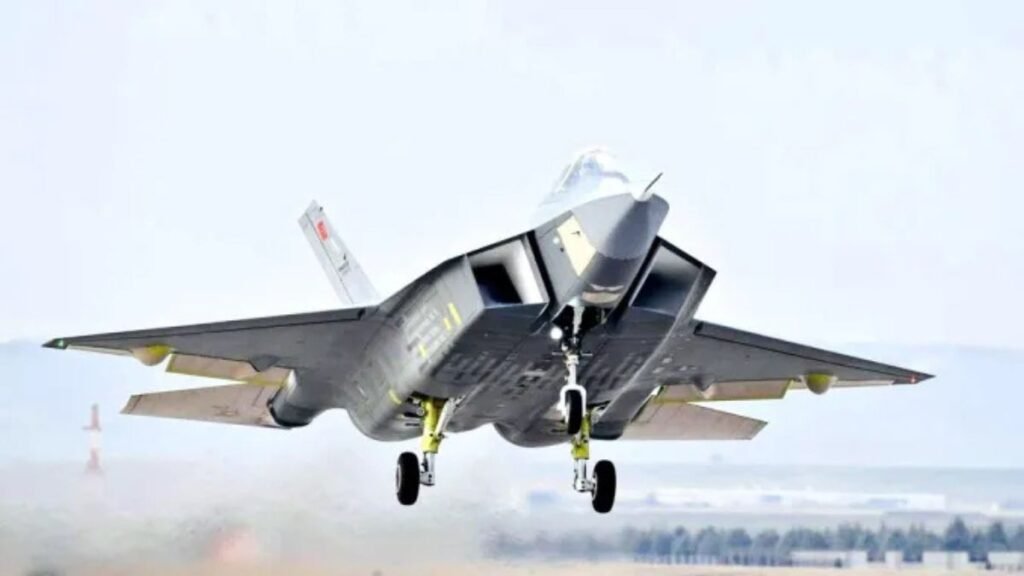
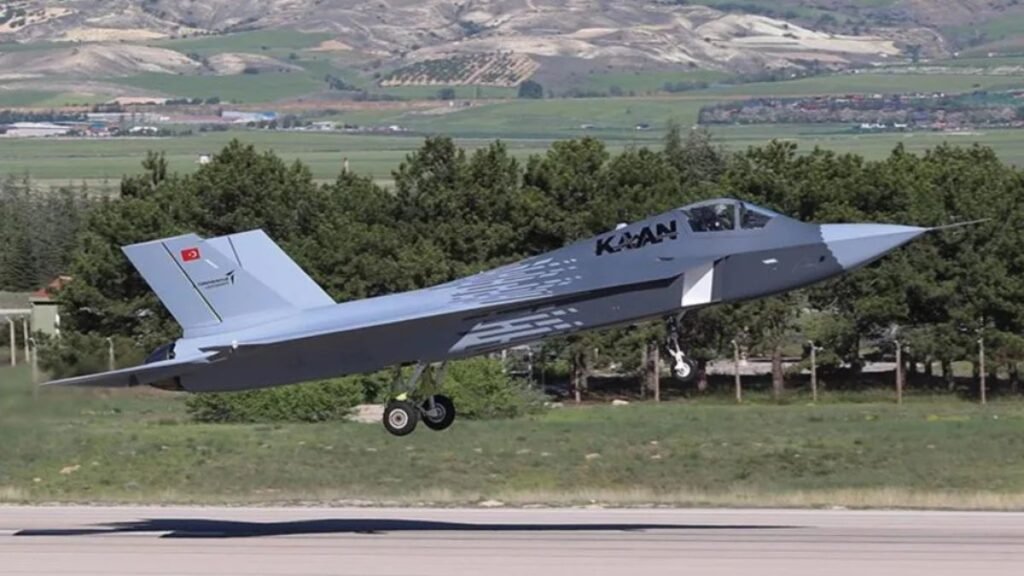
Turkey’s ambitious project, Kaan, seeks to place it among the select few countries that possess fifth-generation stealth fighters. The aircraft is being developed by Turkish Aerospace Industries (TAI). It is envisioned as a jet that combines stealth capability, high speed, and advanced sensor technology.
In terms of technical specifications, the Kaan is approximately 20.3 meters long, has a wingspan of 13.4 meters, and a maximum take-off weight of approximately 35 tons. Its potential top speed is reported to be approximately Mach 1.8, or about 2,200 kilometers per hour, and it will be capable of flying at altitudes exceeding 16,700 meters. These figures make it highly capable for the modern battlefield.
But the Kaan’s true strength lies not in its speed or stealth. It is being designed not as a “Top Gun”-style lone fighter, but as the hub of a network—a command platform that can provide real-time command to drones and other systems flying alongside it.
Not a single pilot, but an air team
In previous generations of fighter aircraft, everything revolved around a pilot and a single aircraft. Decisions, targeting, and attack—everything used to be decided within the same cockpit. But the Kaan concept is different. It will be the “nerve center” of a small, semi-autonomous aerial network.
Here, human decisions and algorithms will work together. The Kaan will collect data from its sensors, process it, and then assign different missions to the drones flying alongside it. This way, air warfare will become a “team sport,” where each member will have a different role, but the strategy will be controlled from a single center.
Anka III: The Risk-Taking Autonomous Wingman
The second key member of this team is the Anka III—an unmanned combat aerial vehicle (UCAV). It has no pilot on board and its design lacks a vertical tail fin, reducing its radar signature. This stealth profile gives it the ability to penetrate enemy-protected airspace first.
According to the Turkish concept, two Anka III drones could fly on either side of a Kaan. These drones can carry weapons, conduct surveillance, or jam enemy communications. If the risk is high, these drones will take the lead, while a human pilot will conduct the entire operation from a distance.
MUM-T: Future Air Strategy
This entire model is called MUM-T, or “manned-unmanned teaming.” Its aim is not to eliminate the pilot, but to multiply his reach and effectiveness. The Kaan will take the lead—integrating data, assessing the situation, and assigning tasks. While the Anka III drones will perform tasks such as reconnaissance, electronic jamming, or precision strikes.
This strategy could make aerial warfare more complex, but also more effective. Where previously a single aircraft handled a single mission, a small network can now engage multiple targets. This Turkish initiative demonstrates that in the future, warfare will not be solely a matter of strength, but rather a matter of technological synergy and smart coordination.