
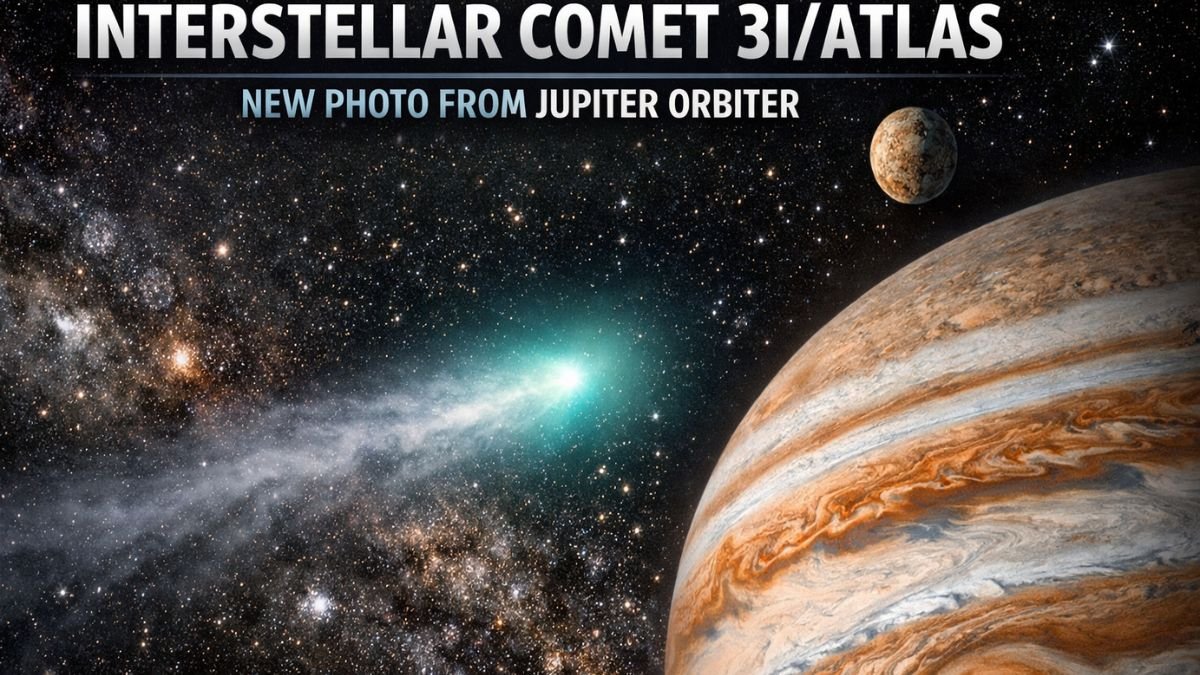
Astronomers around the world were thrilled when a new image revealed the mysterious interstellar comet known as 3I/ATLAS passing through our cosmic neighborhood. The photograph, captured by a spacecraft orbiting the giant planet Jupiter, offers a remarkable glimpse of a traveler that did not originate in our solar system. For scientists who study space and planetary formation, discoveries like this are incredibly valuable because they provide clues about the distant star systems where such objects were born.
The comet’s name reflects its discovery by the powerful sky-scanning project known as ATLAS, a network designed to identify potentially hazardous asteroids and other celestial objects approaching Earth. When astronomers examined the comet’s trajectory, they realized something extraordinary—it was not bound to the Sun in a long elliptical orbit like most comets. Instead, it was traveling on a hyperbolic path, confirming that it had come from interstellar space.
This makes 3I/ATLAS only the third confirmed interstellar visitor ever observed passing through our solar system, making the new photograph an important moment in the study of cosmic exploration.
How the Jupiter Orbiter Captured the Image
The image of the comet was taken by the spacecraft Juno, which has been orbiting Jupiter since 2016. While the mission’s main goal is to study Jupiter’s atmosphere, magnetic field, and internal structure, its instruments are also capable of capturing distant celestial objects when conditions are favorable.
As the spacecraft traveled along its orbit around Jupiter, scientists used its cameras and observational tools to track the faint glow of 3I/ATLAS as it passed through the outer region of the solar system. Because Jupiter lies far from Earth compared to inner planets, the vantage point from the spacecraft offered a unique perspective that ground-based telescopes could not easily obtain.
The resulting photograph shows a faint streak of light against the dark backdrop of space. Though subtle, the image clearly reveals the comet’s dusty coma and the early formation of a tail caused by sunlight interacting with frozen gases on its surface. For researchers, even a single image like this can provide valuable data about the comet’s size, composition, and activity.
Why Interstellar Objects Fascinate Scientists
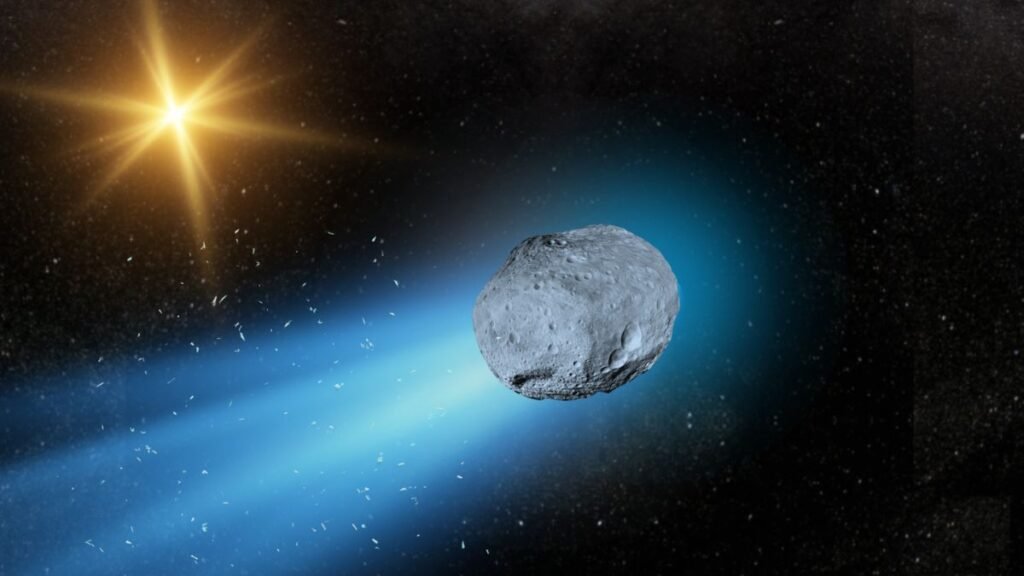
Interstellar objects are among the most mysterious bodies astronomers can observe. Unlike asteroids or comets that formed within our solar system, these travelers originated around distant stars, sometimes billions of years ago. Over immense periods of time, gravitational interactions or stellar disturbances can eject such objects from their home systems, sending them wandering through the galaxy.
When one of these objects happens to pass through our solar system, it provides scientists with a rare opportunity to study material formed under completely different cosmic conditions. By examining its trajectory, speed, and chemical makeup, researchers can learn about planetary formation processes in other star systems.
The discovery of 3I/ATLAS follows two earlier interstellar visitors that captured global attention. The first was ʻOumuamua, detected in 2017 and notable for its unusual shape and acceleration. The second was 2I/Borisov, which behaved more like a traditional comet with a visible tail. Each of these objects offered new insights, and 3I/ATLAS is expected to expand that knowledge even further.
Understanding the Path of 3I/ATLAS
One of the key clues that revealed the comet’s interstellar origin was its speed. Objects that orbit the Sun usually move within a predictable range of velocities depending on their distance. However, 3I/ATLAS was traveling far too fast to be gravitationally bound to the Sun.
Astronomers calculated that the comet entered our solar system from a direction far outside the plane where most planets orbit. Its hyperbolic path means that after passing near the Sun and the outer planets, it will continue on its journey back into interstellar space, never to return.
The presence of Jupiter along its path also played a significant role in capturing the new image. Because Jupiter is the largest planet in our solar system, its powerful gravitational influence can alter the trajectories of passing objects. Although 3I/ATLAS is moving too fast to be captured by Jupiter’s gravity, the planet’s location provided an ideal observation point for spacecraft orbiting it.
What the Photo Reveals About the Comet
The newly captured image might look simple at first glance, but it contains important information. The faint glow surrounding the comet suggests that volatile materials such as water ice, carbon dioxide, and other frozen gases are evaporating as the comet approaches the Sun. This process forms the characteristic coma and tail that comets are known for.
Scientists are particularly interested in studying the chemical fingerprints within this glowing cloud. Spectroscopic analysis can reveal the presence of molecules that may have formed around another star. By comparing these materials with those found in our own solar system’s comets, researchers can better understand how common certain chemical compounds are throughout the galaxy.
Early estimates suggest that 3I/ATLAS may be several kilometers across, though its exact size remains uncertain. Its brightness and activity level will continue to change as it moves closer to the Sun, potentially providing even clearer observations in the months ahead.
The Role of Spacecraft Beyond Earth
The success of this observation highlights how important spacecraft located far from Earth can be for astronomy. Ground-based telescopes must look through Earth’s atmosphere, which can blur or distort faint objects. Spacecraft operating in deep space, however, can observe the cosmos with fewer limitations.
The orbit of Juno around Jupiter created a unique observational angle that complements data gathered by telescopes on Earth and in orbit around our planet. By combining these perspectives, astronomers can triangulate the comet’s position more accurately and build a more detailed picture of its movement.
Future missions may even be designed specifically to intercept or closely study interstellar visitors. Scientists have already begun discussing concepts for spacecraft capable of rapidly launching toward newly discovered objects like 3I/ATLAS before they leave our solar system.
What Interstellar Comets Tell Us About the Galaxy
Studying interstellar comets does more than satisfy scientific curiosity. These objects act as natural messengers from other star systems, carrying physical samples of material that formed under different cosmic environments.
For example, the composition of their ice and dust can reveal whether planetary systems around other stars form in ways similar to our own. If scientists find familiar molecules, it could suggest that the processes that created planets and comets around our Sun are common throughout the Milky Way.
On the other hand, unusual chemical signatures might indicate that planetary formation varies widely from one system to another. Either outcome would greatly expand our understanding of how solar systems evolve across the galaxy.
The Future Observations of 3I/ATLAS
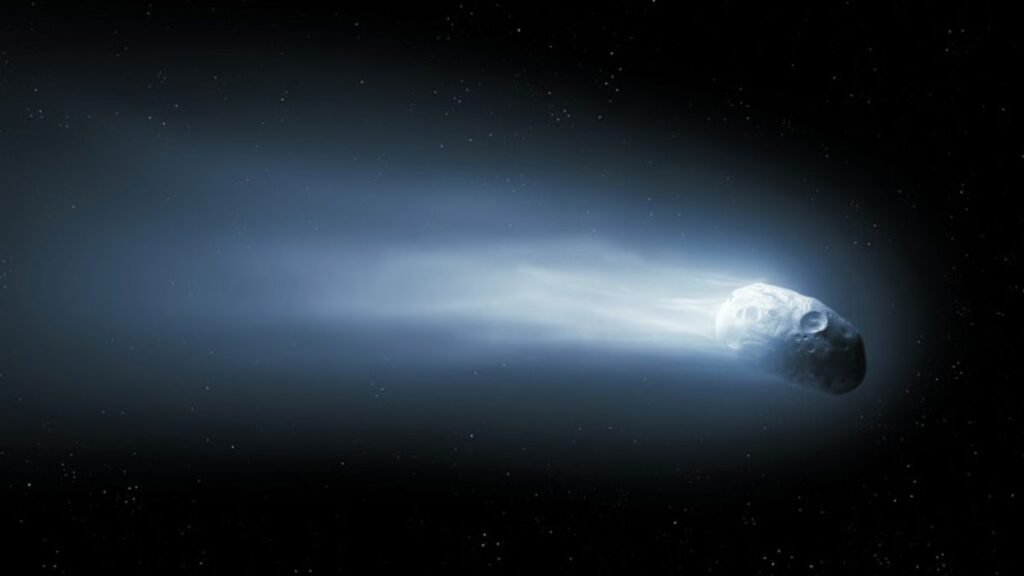
As 3I/ATLAS continues its journey through the solar system, astronomers will monitor it using a wide array of telescopes and instruments. Observatories around the world are already scheduling observation campaigns to capture images, measure its brightness, and analyze its composition.
The comet’s closest approach to the Sun will likely produce the most dramatic activity, potentially creating a brighter tail and making it easier to observe. If conditions are favorable, even amateur astronomers with powerful telescopes may be able to glimpse the interstellar visitor.
Meanwhile, spacecraft such as Juno will continue providing additional data whenever the comet passes within observational range. Each new measurement will help scientists refine models of its origin, structure, and behavior.
A Reminder of the Vastness of Space
The discovery and imaging of 3I/ATLAS serves as a powerful reminder that our solar system is not isolated. Instead, it exists within a vast cosmic environment where objects from distant star systems occasionally pass through like travelers on an interstellar highway.
Every time astronomers detect such a visitor, they gain a fleeting but valuable opportunity to study material that formed far beyond our Sun’s influence. The photograph captured near Jupiter is more than just an image—it represents a connection between our solar system and the broader galaxy.
As technology improves and sky surveys become more advanced, scientists expect to discover many more interstellar objects in the future. Each one will carry new clues about the formation of planets, the chemistry of distant star systems, and the dynamic nature of our galaxy.
For now, the image of 3I/ATLAS drifting silently through space stands as another exciting chapter in humanity’s ongoing exploration of the universe.