
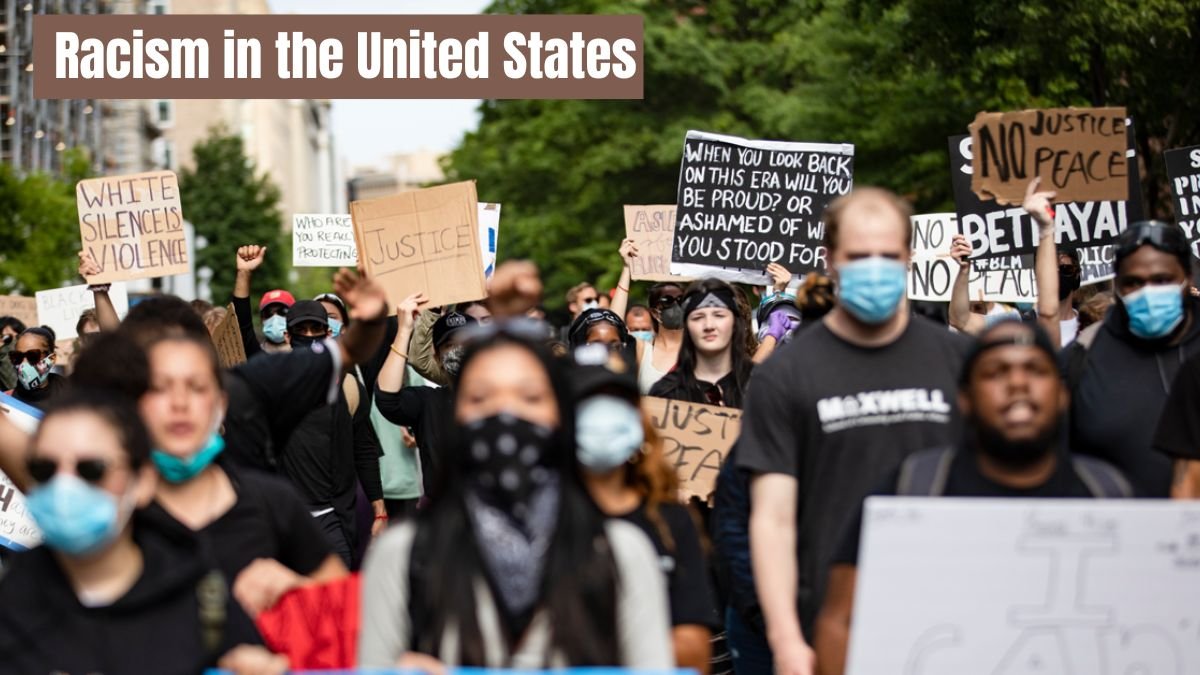
The United States is often called the “land of freedom” and “equal opportunity,” but the country’s history is deeply intertwined with racism. From its very founding, racial inequality became an integral part of America’s social structure. With the arrival of European colonists, Native American communities were dispossessed of their land and subjected to violence, displacement, and discrimination. During the same period, people brought from Africa were enslaved and used for labor in agriculture and industry. Thus, the economic and political foundations of America were built on a system that assigned different statuses to people based on their race.
It is crucial to understand that racism was not merely individual hatred, but a deliberate system reinforced by laws and social norms.
The Era of Slavery: The Division of Humanity Based on Race
From the 17th to the 19th centuries, slavery was a legal and common practice in America. People of African descent were bought and sold like property and had no rights whatsoever. To justify slavery, the idea was propagated that Black people were biologically inferior and therefore not worthy of freedom. This racial ideology served not only economic gain but also as a means of maintaining power.
During this period, racism not only harmed the Black community but also ingrained in society the belief that white people were inherently superior. This belief subsequently formed the basis of many American policies and social practices.
The Civil War and the Abolition of Slavery: The Beginning of Change or an Illusion?
Following the American Civil War in the 1860s, slavery was legally abolished. This was a historic step, but it did not end racism. Even after the abolition of slavery, Black Americans did not receive equal civil rights. Some reforms were implemented during the Reconstruction period, but soon after, laws were enacted in the Southern states that reintroduced racial discrimination in new forms.
This period made it clear that changing laws does not automatically change mindsets and systems. Racism now operates through new, more insidious methods rather than overt slavery.
Jim Crow Laws: A System to Legitimize Segregation
In the late 19th and early 20th centuries, Jim Crow Laws legalized racial segregation in the United States. Schools, buses, restaurants, restrooms—separate facilities were mandated for Black and white people everywhere. The claim was “separate but equal,” but in reality, the Black community was consistently given inferior facilities.
This system made racism an integral part of daily life. These weren’t just laws, but also social norms, the violation of which resulted in violence and oppression.
The Civil Rights Movement: An Organized Struggle Against Racism
In the 1950s and 1960s, the Civil Rights Movement in the United States openly challenged racism. Martin Luther King Jr., Rosa Parks, and many other activists demanded equal rights through peaceful protest. This movement demonstrated that racial discrimination was not only morally wrong but also contrary to the fundamental principles of democracy.
This struggle resulted in important legislation such as the Civil Rights Act and the Voting Rights Act, which played a significant role in ending legal segregation. But this was only one stage, not the end.
Why Did Racism Persist Even After the Law Changed?
Despite legal changes, racial inequality in the United States did not completely disappear. This was because racism had become more structural than simply a matter of individual behavior. Inequalities persisted in every area—housing, education, employment, healthcare, and the justice system.
For example, many Black families were prevented from buying homes in desirable neighborhoods, limiting their wealth and opportunities. This history is still reflected in economic disparities today.
The Evolving Nature of Racism in Modern America
In contemporary America, fewer people express overtly racist views, but racism has not been eradicated. It now manifests through “color-blind” thinking, policy decisions, and social perceptions. People say, “Everyone is equal now,” but the statistics tell a different story.
Police brutality, disparities in the justice system, and economic inequality demonstrate that the effects of history are still present. Modern racism is difficult to identify because it often appears normal and rational.
The Role of Media and Education in Racism
The American media and education system have also shaped the history of racism. For a long time, history was taught from a one-sided perspective, neglecting the experiences of Native Americans and African Americans. The media also portrayed certain communities negatively, reinforcing social biases.
While there have been efforts in recent years to provide a more balanced narrative, the struggle continues.
Why Understanding History is Crucial
The history of racism in the United States is not merely a matter of the past; it is key to understanding the present. Only by understanding how and why inequalities developed can we comprehend why certain communities remain disadvantaged today.
Understanding history is not about assigning blame, but about building a more just future.
Conclusion: Learning from the Past to Build the Future
The History of Racism in the United States Explained teaches us that racism has been a central part of American history. It has evolved over time, but it has not been completely eliminated. From slavery to modern structural inequalities, racism has taken on many different forms.
Only when we honestly confront this history can we move toward a society where freedom and equality are not just words, but lived realities.
