
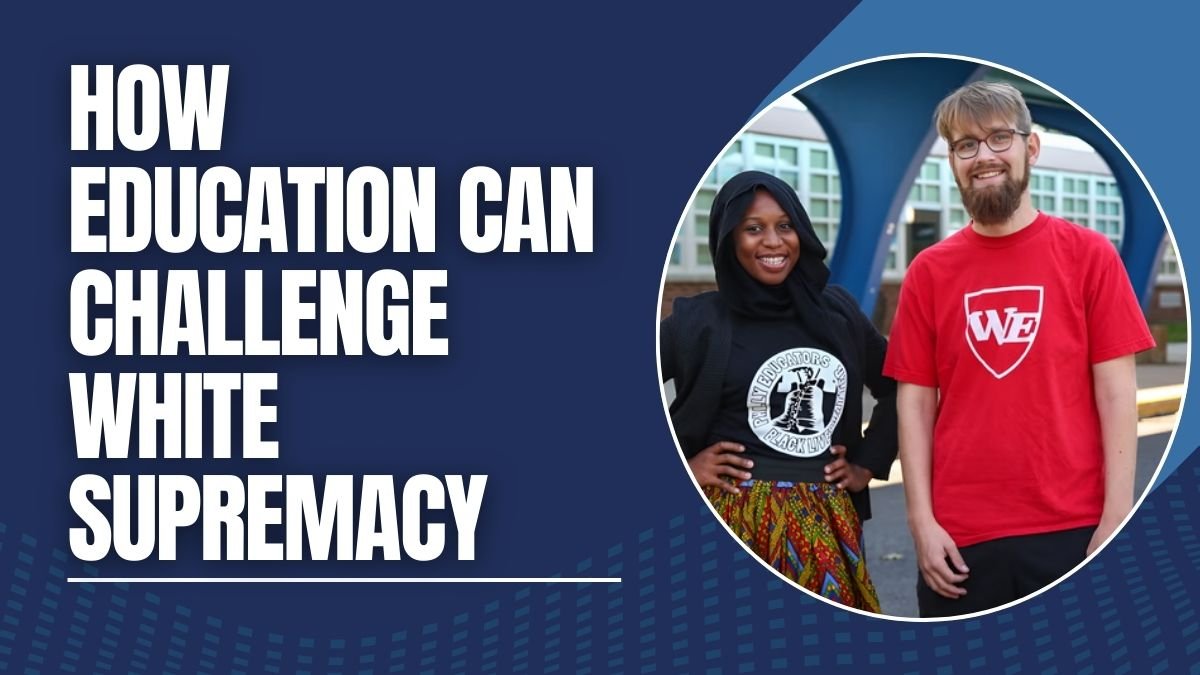
Education is often seen as merely a means to obtain a job or a degree, but in reality, education is the most powerful force shaping society’s thinking. Schools and textbooks shape how we view the world, what we consider important, and what we ignore. Therefore, when the education system prioritizes one race, culture, or history above all others, it inadvertently reinforces white supremacy.
White supremacy is not simply hatred or discrimination; it is a system in which the thinking, culture, and experiences of white people are considered normal and superior, while other communities are marginalized. If education recognizes and strives to dismantle this inequality, it can shake the very foundations of society.
Emerging from the Colonial Framework of the Curriculum
For too long, our education system has been based on a European and Western perspective. History books provide stories of empires, discoveries, and conquests but lack the voices of the people upon whom these empires were imposed. The stories of Indigenous, Black, and colonized societies are either missing or presented superficially.
To challenge white supremacy, it is essential to transform the curriculum to include the history, knowledge, and struggles of all communities. This means not just adding specific chapters but changing the entire mindset. Students must understand that the world is not shaped solely by the perspective of Europe or America; African, Asian, Latin American, and indigenous societies have also shaped civilization.
Even in subjects like science, mathematics, and medicine, it is important to demonstrate that knowledge comes from diverse cultures. This helps students realize that wisdom is not the exclusive preserve of any one race or country.
Power Balance in Teaching Methods
The relationship between teacher and student in the classroom also reflects power. When the teacher becomes the sole authority and the student the silent compliant, the same power structures that exist in society are replicated. Instead, if the teacher allows students the freedom to question, debate, and express their opinions, it teaches them independent thinking.
It’s also crucial that teachers recognize their own biases. They often unconsciously expect more from some students and underestimate others. This behavior impacts both students’ self-confidence and future. When teachers are fair and sensitive, the classroom becomes truly equal for everyone.
Discrimination Hidden in Institutional Structures
Schools and colleges are not just places of learning but entire systems. Their rules, discipline, dress codes, and leadership structures determine who feels comfortable and who doesn’t. Sometimes, rules are created that directly target a particular race or culture, such as restrictions on hairstyles or clothing.
If educational institutions truly want equality, they must review these rules. It’s also crucial to have diverse faculty and administration. When students see people like themselves in leadership, they feel a sense of belonging.
The Role of the Community, Parents, and Students
Change doesn’t just come from the top. Only when students, parents, and communities raise questions together can the system be shaken. Students can point out discrimination based on their experiences. Parents can demand transparency and accountability from schools.
When the education system connects with social movements and communities, it is no longer confined to books but is connected to real life. This helps students understand that the purpose of education is not just to pass but also to improve society.
Conclusion: Education Can Be a Revolution
Eradicating white supremacy is not easy, as it has been perpetuated for generations. But education is where the thinking of a new generation is shaped. When the curriculum is honest, the teaching method democratic, the institutions just, and the community active, education can be a revolution.
Such education not only imparts knowledge but also teaches the habit of seeing people as human beings. This is the beginning of real change.
