

In early March 2026, the Internal Revenue Service (IRS) and the U.S. Department of the Treasury took a significant step in fleshing out one of the most talked‑about provisions of recent tax legislation. The agencies issued comprehensive proposed regulations that spell out how and when the government will make $1,000 contributions to so‑called “Trump Accounts,” a new type of tax‑advantaged savings account for children created under the One Big Beautiful Bill Act signed into law in July 2025. These rules mark a major development in the implementation of the program and represent the Biden successor administration’s effort to provide clarity on a complex new benefit that could touch millions of American families.
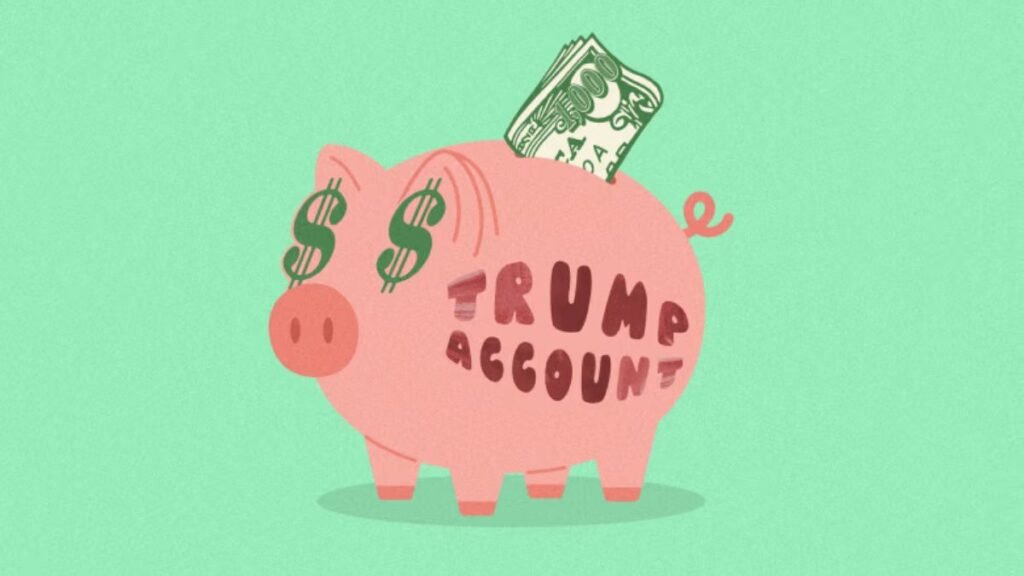
At the heart of the new guidance is the $1,000 “pilot program contribution” that the federal government will make for each eligible child’s Trump Account. Children born between January 1, 2025 and December 31, 2028 who meet the eligibility criteria — including citizenship and having a Social Security number — may receive this seed contribution, provided that an election is filed on their behalf. This contribution is intended to give every young American a head start on saving for long‑term goals such as education, homeownership, or retirement, harnessing the compound growth of investments over many decades.
Families and guardians have a wide window of opportunity to claim this benefit. Under the proposed rules, the parent, guardian, or other authorized individual may elect to establish a Trump Account and request the government’s $1,000 contribution from the time the child receives a Social Security number up until the end of the calendar year in which the child turns 17. This generous timeframe — potentially spanning up to 17 years — reflects the IRS’s effort to ensure that eligible children whose parents may be unaware of the program or slow to apply are still able to benefit.
Understanding the Trump Account Framework
To fully appreciate the significance of the IRS’s proposed rules, it is important to understand what a Trump Account actually is and how it fits within the broader tax code. Trump Accounts are a form of individual retirement account (IRA) specifically designed for minors. They were created under Section 530A of the Internal Revenue Code as part of the One Big Beautiful Bill Act — a sweeping tax and spending law that embodies the signature domestic fiscal priorities of the Trump administration’s second term. This law contains hundreds of provisions affecting tax rates, deductions, credits, and new savings vehicles like the Trump Account.
Unlike traditional IRAs, Trump Accounts have unique features aimed at encouraging early savings and intergenerational wealth building. Any individual — including parents, grandparents, other family members, or friends — can contribute to a child’s Trump Account, with annual limits similar to other tax‑advantaged accounts. What sets these accounts apart, however, is the presidentially named seed money: the one‑time $1,000 contribution made by the federal government for each eligible child. This contribution is exempt from the usual annual contribution limits and is intended to supercharge account growth over time.
The funds in a Trump Account are invested in a manner similar to traditional IRAs, typically in broad‑based stock index funds or mutual funds. These investments may grow tax‑deferred, meaning families won’t pay taxes on earnings until funds are withdrawn. This makes Trump Accounts potentially powerful tools for long‑range financial planning. As beneficiaries age, they may also be able to roll balances into other retirement accounts or use them for qualified expenses, much like other retirement vehicles.
Proposed Rules and Their Implications
In issuing the proposed regulations, the IRS and Treasury outlined detailed requirements related to both the mechanics of opening a Trump Account and the specific process for securing the $1,000 government contribution. A central component of the new guidance is Form 4547, the “Trump Account Election(s)” form that parents and guardians must submit to request the establishment of an account and the associated $1,000. The IRS has indicated that the form can be filed electronically or attached to a tax return, easing access for families at different stages of the tax cycle.
The proposed regulations clarify that an authorized individual must make the election to open an initial Trump Account for a child. While in most instances parents or legal guardians will perform this role, the rules allow a priority order for responsibility should multiple qualified adults be involved. For example, if no election is made when the child is very young, an older sibling or grandparent might have authority to establish the account on behalf of the minor. This flexibility is designed to help ensure that administrative hurdles do not block children from receiving their benefits.
The IRS’s guidance also defines who qualifies as an “eligible child” for the pilot program contribution. Eligible children must be U.S. citizens with Social Security numbers and must not have already had a prior pilot program election processed by the Treasury. This requirement prevents duplicate claims and ensures that each child receives only one federal contribution. Importantly, children born outside the 2025‑2028 window may still have Trump Accounts, but they will not receive the government seed contribution, placing a premium on timely action by families with infants and young children.
Public Response and Expert Commentary
Since the IRS released its proposed rules, tax professionals, advocacy groups, and lawmakers have been debating the potential benefits and challenges of the Trump Account program. Supporters argue that the initiative could be transformative for millions of American families, particularly those who lack access to robust savings mechanisms. By providing a modest initial contribution and tax‑advantaged growth, Trump Accounts could give children from diverse backgrounds a meaningful financial head start that might help cover college costs, down payments, or retirement savings.
However, experts have also pointed to areas where further clarification is needed. For instance, organizations such as the American Retirement Association have asked the IRS to provide clearer guidance on rollover rules — specifically how funds in a Trump Account should be handled when a beneficiary reaches adulthood and seeks to transfer assets into other retirement plans. Questions about how contributions by employers and family members interact with tax reporting requirements have also been raised, suggesting that later refinements to the guidance may be necessary.
Critics outside the tax community have also weighed in. Some commentators contend that naming a tax benefit after a sitting political figure injects partisanship into what should be neutral policy discussions, while others argue that the federal government’s role in seeding private savings accounts represents an overreach. Nonetheless, the IRS’s proposal marks a concrete step forward in implementing a program that was previously theoretical and has now entered the real financial lives of millions of Americans.
What Comes Next?
At the time of this writing, the IRS’s rules remain in the proposed stage. The agencies have invited comments from the public and industry stakeholders, and final regulations are expected later in 2026. Once the guidance is finalized and the election process is fully operational, parents and guardians will need to pay close attention to filing deadlines and eligibility details. The online IRS portal and supporting tools are anticipated to launch in tandem with the program’s broader implementation, making it easier for families to participate.
In the meantime, financial advisers and tax professionals are preparing to help clients navigate the new landscape. Workshops, webinars, and informational campaigns are already emerging to educate the public about Trump Accounts and how to maximize their benefits. With careful planning and timely action, many families stand to add a valuable asset to their long‑term financial toolkit — one that could provide support for generations to come.