
Understanding coin values can feel like opening a treasure chest from the past, and the Lincoln penny is one of those coins that continues to fascinate both new and seasoned collectors. First introduced in 1909, this little copper coin has traveled through major historical eras and has quietly held onto stories that make it more than just pocket change. Today, many collectors look to value charts, mint marks, and rare varieties to understand how much their Lincoln pennies might be worth. While most pennies still hold their face value, the rare and valuable ones can be worth hundreds, even thousands of dollars depending on their condition and scarcity. A Lincoln penny value chart becomes a guide into this world, helping collectors decode which coins are common and which might be hiding a surprising fortune.
The Significance of Year and Mint Mark
The year stamped on a Lincoln penny tells you when it was minted, but the mint mark reveals where it was produced, and together they play a major role in determining value. The mint marks commonly seen on Lincoln pennies include “D” for the Denver Mint, “S” for the San Francisco Mint, and no mint mark at all for coins produced in Philadelphia. Collectors often examine the combination of the year and mint mark because certain years have lower mintages or special varieties that make them far more valuable. A penny from a rare year or a mint facility that produced fewer coins instantly becomes more attractive in the collector’s market.
For example, a 1909 penny with the “S” mint mark is considered one of the key dates in the entire Lincoln series because of its limited production. Similarly, the 1914-D penny is sought after because very few of them survived in good condition, making it a favorite among coin enthusiasts. These details show how a tiny letter under the date can completely change the value of a penny, turning it from a simple copper coin into a prized collectible.
Rare Lincoln Pennies and Their Market Value
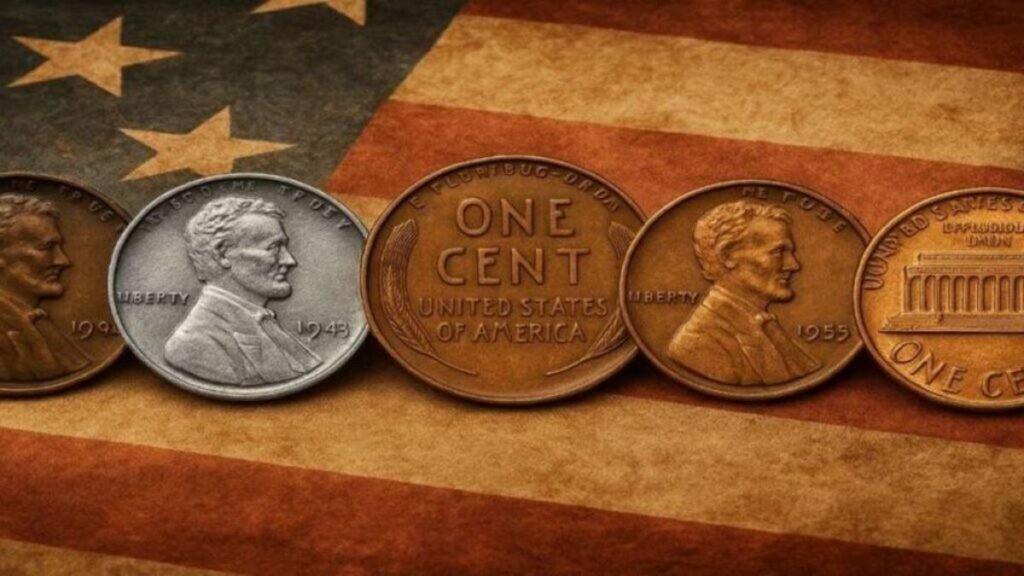
Some of the most valuable Lincoln pennies are not just old, but rare because of limited minting or unique errors. Error coins, in particular, draw a lot of interest because they are one-of-a-kind mistakes that slipped through the mint process. A doubling of the date, a misaligned die, or an off-center strike can push the value of a penny from a few cents to several hundred dollars. The most famous example is the 1955 Doubled Die Lincoln cent, which shows a dramatic doubling of the date and lettering on the obverse. This particular error penny is highly valuable and considered a dream find for many collectors.
Another example is the 1943 copper penny, a legendary coin that resulted from a minting error during World War II. Most 1943 pennies were made of steel due to a copper shortage, but a small number of copper planchets accidentally made their way into production. Today, a genuine 1943 copper penny can be worth a small fortune, often reaching tens of thousands of dollars depending on its condition. These rare varieties are why collectors continuously examine their old jars and wallets, hoping to spot a penny that stands out from the rest.
Why Condition Matters in Determining Value
Even the rarest penny can lose much of its value if it is in poor condition. Coin collectors use a grading system that ranges from “Poor” to “Mint State,” and a penny in pristine condition with full details and original luster will always command a much higher price. Condition becomes crucial when evaluating older coins because many have seen decades of wear in circulation. A 1910 penny that looks clean and sharp will be valued significantly higher than one of the same year that appears heavily worn. The value chart usually reflects different prices based on grades, reminding collectors that both rarity and condition must work together for a coin to reach its full market potential.
Using a Value Chart for Collecting and Identification
A Lincoln penny value chart serves as a helpful roadmap for anyone trying to determine the worth of their collection. It provides price ranges for each year and mint mark combination and highlights key dates that every collector should look out for. While market demand and precious metal prices can cause fluctuations from time to time, the chart remains a reliable starting point for identifying valuable coins. It also encourages collectors to look more closely at details they might have otherwise overlooked, such as subtle mint marks, unusual varieties, or early wheat-back designs that are becoming increasingly hard to find.
Conclusion
Lincoln pennies are more than just tiny pieces of metal; they are artifacts of American history, each carrying unique details that can unlock surprising value for collectors. Whether you are searching through an old coin jar or carefully building a dedicated coin collection, understanding year, mint mark, and condition can guide you toward recognizing which pennies are truly special. With the help of a value chart and a curious eye, anyone can explore the fascinating world of Lincoln penny collecting and perhaps discover a rare treasure hiding in plain sight.