
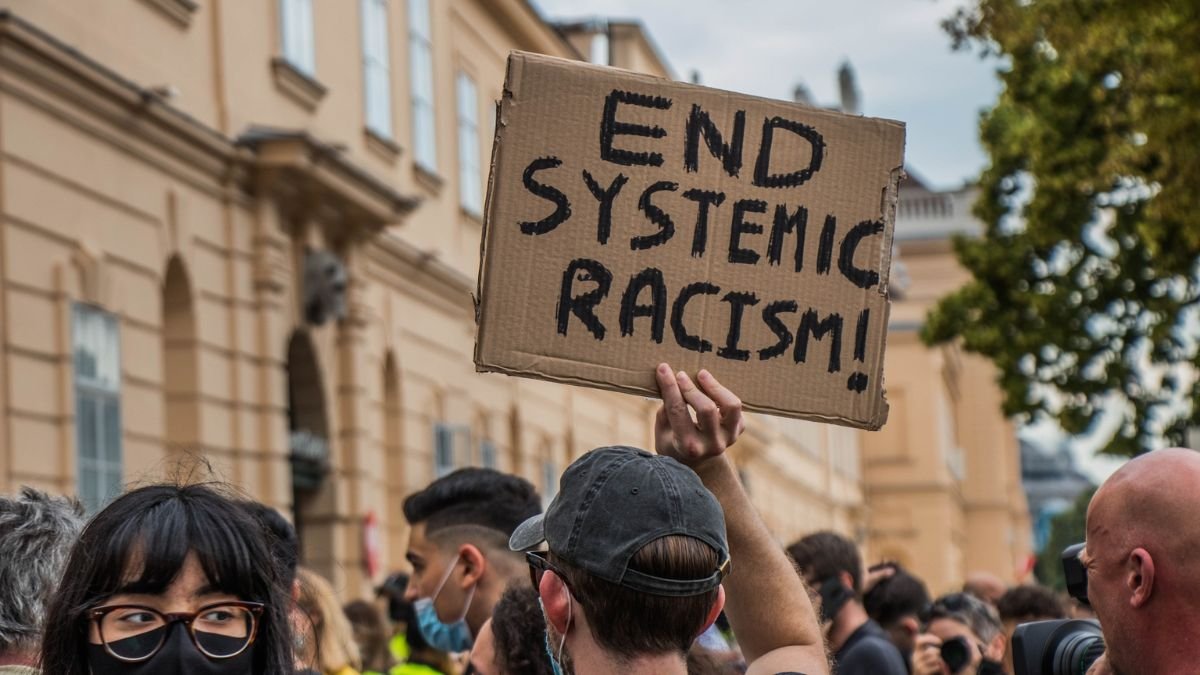
Whenever racism is discussed, most people associate it with an individual’s bad thoughts, hatred, or discriminatory behavior. The common perception is that if a person doesn’t openly express racist views or show hatred towards others, then they are not part of the problem. But this understanding is incomplete. Racism is not merely individual prejudice; it is a system deeply embedded in the structure, policies, and institutions of society.
The real problem begins when racism is confined to just “a few bad people.” This leads society to believe that as soon as individual hatred diminishes, the problem will automatically disappear. The truth is that even without malicious intent, individuals and systems can perpetuate racial inequality.
The Difference Between Individual Prejudice and Structural Racism
Personal bias refers to an individual’s private thoughts or beliefs about a particular race or community. But structural or systemic racism goes far beyond this. It is embedded in the rules, traditions, and institutions that govern society—such as education, employment, housing, law, and healthcare.
In structural racism, it’s not necessary for an individual to consider themselves racist. Often, people honestly believe they treat everyone equally, yet they still support systems that consistently disadvantage certain communities. This is why racism is not just a matter of individual attitudes, but also a systemic issue.
The Role of History: Inequality Didn’t Appear Overnight
It’s crucial to understand that the racial inequalities we see today are not the fault of a single generation. They are the result of centuries of history. Slavery, colonialism, land dispossession, and discriminatory laws have deprived certain communities of resources and opportunities for extended periods.
When a group is excluded from education, wealth, and power for generations, the impact is not limited to the past. It affects the present and the future as well. So, if someone says today that “everyone has an equal opportunity,” they are ignoring this historical reality.
Hidden Racism in Everyday Life
Racism doesn’t always manifest as insults or violence. It’s also hidden in the small details of everyday life—like who gets called for job interviews, which neighborhoods are considered “good” or “bad,” or whose complaints are taken seriously.
Often, these decisions are described as “neutral,” but when viewed on a larger scale, a consistent pattern emerges—some communities benefit more, while others are disadvantaged. This isn’t a coincidence, but a result of systemic issues.
How Do Laws and Institutions Perpetuate Racism?
Laws and institutions are generally considered impartial, but they are also part of the same society where power is unequally distributed. Often, laws don’t explicitly mention race, but their effects disproportionately impact certain communities.
For example, some communities are subjected to greater surveillance in policing and the justice system. This isn’t due to individual hatred, but rather the result of long-standing policies and ingrained biases. In this way, racism persists even without overt racists.
Why Saying “I’m Not Racist” Isn’t Enough
Many people honestly say they are not racist. This may be true, but the problem doesn’t end there. If someone refuses to acknowledge systemic inequality, they unknowingly reinforce that very system.
Reducing racism to a matter of individual identity allows us to evade responsibility. The real question isn’t what we think, but what kind of system we are supporting.
The Role of Media and Education
Media and education play a significant role in both understanding and perpetuating racism. If the media repeatedly portrays certain communities negatively, societal attitudes tend to follow suit. Similarly, if the education system presents history incompletely or from a one-sided perspective, people fail to understand the root causes of inequalities.
Until narratives are balanced and inclusive, racism will continue to be perceived as merely an individual problem.
Why should racism be considered a social problem, not just a moral one?
If we treat racism solely as a moral issue—a question of whether someone is a good or bad person—we overlook its social impact. Racism affects education, healthcare, the economy, and democracy.
It undermines a society’s productivity, trust, and unity. Therefore, understanding and challenging racism is not only a moral responsibility but also a social necessity.
Where does change begin?
Fighting racism begins not with self-blame, but with acknowledging the truth. Recognizing that inequality is embedded in the system is the first step. This is followed by addressing education, policy reforms, and the equitable distribution of resources.
On an individual level, asking questions, listening, and learning are also part of the change. Only when we say, “This is not just individual prejudice,” do we move towards real solutions.
Conclusion: A broader perspective on racism is essential
Why Racism Is More Than Just Personal Bias teaches us that racism is not limited to the attitudes of a few individuals. It is deeply ingrained in the structure of society and operates in subtle ways.
Only when we stop viewing it as mere individual hatred and begin to understand it at a systemic level can real change become possible. Recognizing, understanding, and challenging racism—this is the first step toward a more just and equitable society.
