
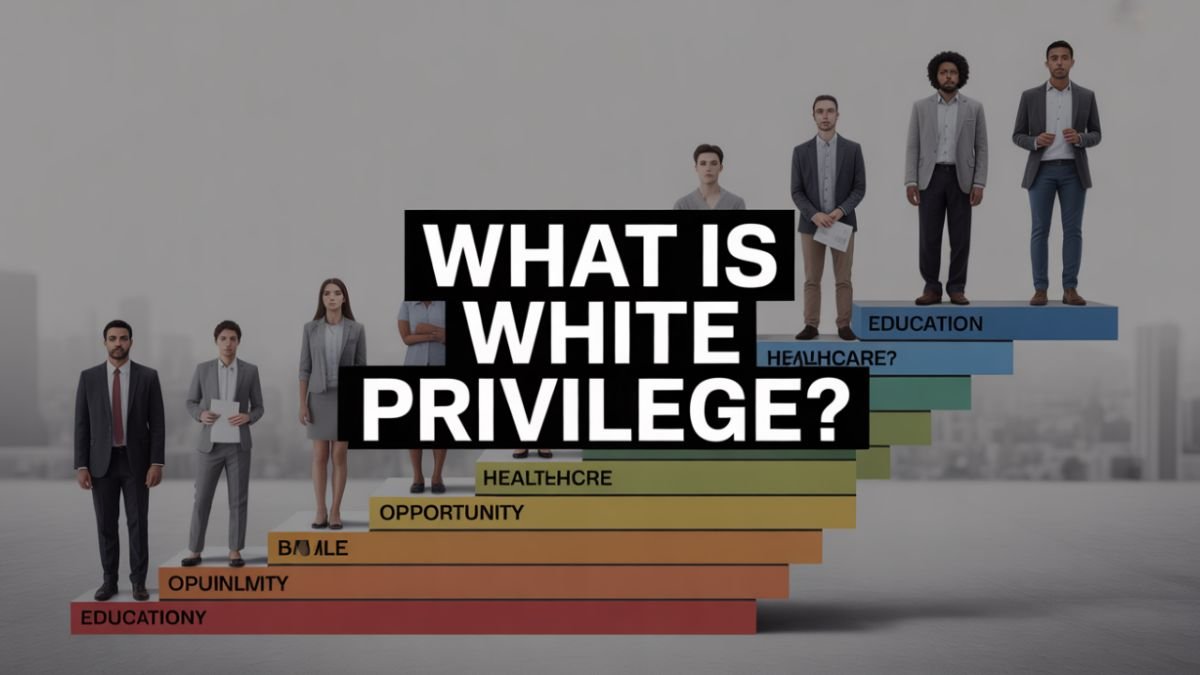
White privilege is a concept that refers to the social, economic, and political advantages that white people often experience simply because of their race. These advantages are usually invisible to those who benefit from them and are embedded in the fabric of society, from education and employment to law enforcement and healthcare. White privilege does not mean that white people do not face hardships or challenges in life. Instead, it highlights the systemic benefits they enjoy that are not equally accessible to people of color. Understanding this concept is crucial for recognizing inequalities and working towards a more just and equitable society.
White privilege operates in ways both subtle and overt. It can manifest in everyday experiences, such as being assumed competent in professional settings, being represented in media and history as the norm, or walking into stores without fear of being followed or suspected of theft. These advantages are often normalized, making them difficult to recognize for those who benefit from them, yet they have real, measurable impacts on people’s lives.
The Origins of White Privilege
The roots of white privilege can be traced back to centuries of systemic racism, colonization, and segregation. Historical policies in countries like the United States, Canada, Australia, and European nations created structures that benefited white populations while marginalizing communities of color. For example, laws that denied Black Americans the right to vote, own property, or access quality education created a generational wealth gap that persists today. Similarly, Indigenous peoples were subjected to displacement and assimilation policies that stripped them of cultural and economic resources.
Over time, these historical advantages became embedded in societal structures. White privilege is not simply a relic of the past; it continues to influence modern systems. Housing policies, school funding, employment opportunities, and criminal justice practices often reflect the lingering effects of these historical inequalities, reinforcing advantages for white individuals while limiting access for others.
Examples of White Privilege in Daily Life
White privilege can appear in both obvious and subtle ways in everyday life. In education, for instance, white students are often more likely to attend schools with better funding, more experienced teachers, and advanced learning resources. This disparity can have long-term effects on career opportunities and earning potential. On the other hand, students of color may face systemic barriers that limit their academic growth, such as overcrowded classrooms, underfunded schools, and implicit bias from educators.
In the workplace, white privilege can manifest through hiring practices, networking opportunities, and perceptions of competence. Studies have shown that resumes with traditionally white-sounding names are more likely to receive interview calls compared to identical resumes with names associated with people of color. Once employed, white employees are more likely to be promoted and supported in their careers, even if their skills and experience are comparable to their peers of color.
Interactions with law enforcement also demonstrate white privilege. White individuals are statistically less likely to be stopped, searched, or treated with suspicion compared to people of color. This privilege extends to encounters with the justice system, where white defendants are often less likely to face harsh sentencing for similar offenses. Such disparities highlight how privilege operates within legal and institutional frameworks, often without conscious intent.
Even social interactions can reflect white privilege. Representation matters, and seeing people who look like you in positions of power, in media, and in cultural narratives reinforces a sense of belonging and normalcy. White individuals often grow up with countless examples of people who share their race succeeding in all areas of life, while people of color may rarely see themselves reflected positively in these spaces. This representation, or lack thereof, influences self-esteem, ambition, and opportunities.
Misconceptions About White Privilege
A common misconception about white privilege is that it implies white people have no struggles or challenges. This is not true. People of all races face hardships in life, including financial difficulties, health issues, and personal loss. White privilege does not negate these challenges; it simply means that race is less likely to be an additional barrier. White individuals often navigate systems that are designed around their racial identity, giving them an unearned advantage in certain circumstances.
Another misunderstanding is that acknowledging white privilege is an attack on individuals. In reality, recognizing privilege is about understanding systemic inequalities rather than blaming people for their advantages. It encourages empathy, awareness, and action to dismantle unfair systems. By identifying privilege, societies can create more equitable opportunities for everyone, regardless of race.
The Importance of Recognizing White Privilege
Understanding white privilege is essential for fostering social justice. When individuals acknowledge the ways in which race confers unearned advantages, they are better equipped to challenge inequities and support marginalized communities. This recognition is the first step toward meaningful change in institutions, policies, and daily interactions.
Education about white privilege also encourages self-reflection. Individuals can examine their own lives, the benefits they may have taken for granted, and the ways they can contribute to equity. This does not mean feeling guilty for existing advantages but rather using awareness to promote fairness and inclusion.
Moreover, recognizing white privilege helps dismantle systemic racism. Policies, practices, and social norms often perpetuate disparities unconsciously. When people understand how privilege operates, they are more likely to advocate for reforms in areas like education, healthcare, employment, and criminal justice, creating structures that serve everyone more fairly.
Moving Beyond Awareness to Action
Acknowledging white privilege is only the first step; taking action is equally important. This can involve amplifying marginalized voices, challenging discriminatory practices, and supporting policies that reduce inequality. For example, advocating for fair hiring practices, equitable school funding, and inclusive representation in media can help create a society where race does not determine access to opportunities.
Individuals can also practice allyship in daily interactions. This means listening to and validating the experiences of people of color, confronting biased behavior when it occurs, and leveraging personal privilege to promote equity. Small actions, like mentoring, sharing opportunities, or challenging stereotypes, contribute to broader societal change.
Organizations and institutions must also take responsibility. Implementing diversity and inclusion initiatives, conducting equity audits, and revising policies that perpetuate disparities are practical steps toward reducing systemic advantages tied to race. Recognizing white privilege in these contexts ensures that change is structural rather than superficial.
Conclusion
White privilege is a complex and often misunderstood concept, but understanding it is crucial for building a more equitable society. It is not about individual blame but about recognizing systemic advantages that have been historically and culturally embedded. By examining the ways in which privilege operates in education, employment, law enforcement, and daily life, individuals and communities can take meaningful steps toward justice and inclusion.
Recognizing white privilege encourages self-reflection, empathy, and proactive efforts to dismantle inequality. It challenges societies to create systems where everyone has the opportunity to thrive, regardless of race. While the concept may be uncomfortable for some, it is a necessary conversation for achieving fairness and equity in modern life. Awareness, education, and action together form the foundation for a world where privilege is no longer determined by the color of one’s skin.
