
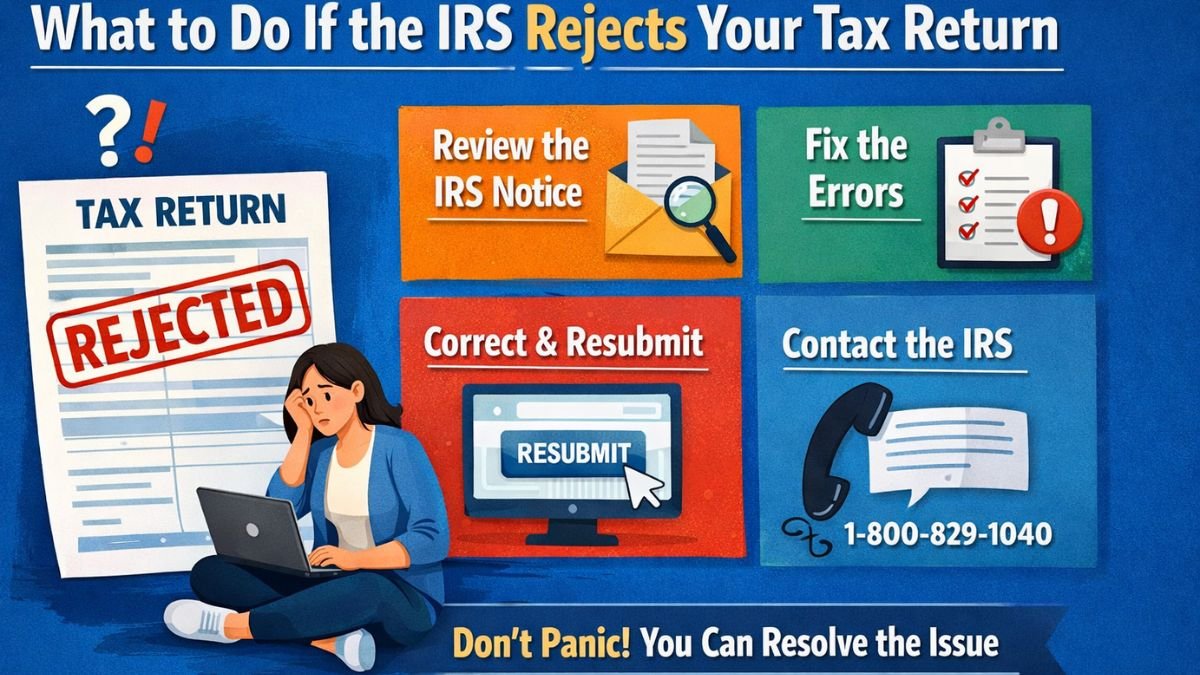
Few things create as much anxiety during tax season as seeing a message that your tax return has been rejected. After carefully gathering documents, entering numbers, and hitting submit, a rejection can feel frustrating and even alarming. However, an IRS rejection is far more common than many people realize, and in most cases, it is fixable without serious consequences. Understanding why rejections happen and knowing the right steps to take can help you resolve the issue quickly and protect your refund.
Understanding What a Tax Return Rejection Really Means
When your tax return is rejected, it does not mean you are in trouble or under audit. A rejection simply means the Internal Revenue Service could not accept your return due to a problem detected during its initial electronic screening. This screening checks for basic accuracy, missing information, or mismatches with IRS records.
A rejected return has not been filed yet. This distinction is important because penalties for late filing generally apply only if you fail to correct and resubmit the return by the deadline. In other words, a rejection is a pause, not a final denial.
Common Reasons the IRS Rejects Tax Returns
Most rejections happen for relatively simple reasons. One of the most common is incorrect personal information, such as a misspelled name or a Social Security number that does not match IRS or Social Security Administration records. Even a small typo can trigger a rejection.
Another frequent issue involves dependent information. If a dependent’s Social Security number has already been claimed on another return, the IRS system will automatically reject the second filing. This often happens in cases of divorced or separated parents or when someone else mistakenly claims the same dependent.
Income reporting errors can also cause problems. If the income reported on your return does not match the information the IRS has received from employers or financial institutions, the return may be rejected. Additionally, math errors, missing forms, or selecting the wrong filing status can all lead to rejection.
How You Will Be Notified of a Rejection
If you filed electronically, you will usually receive a rejection notice within 24 to 48 hours. This notice typically comes from your tax software provider or tax preparer, not directly from the IRS. The message will include a rejection code and a brief explanation of what needs to be corrected.
If you filed a paper return, rejections work differently. Paper returns are rarely “rejected” in the same way, but they may be returned to you for corrections or result in IRS correspondence requesting clarification. Electronic filing, however, is where most rejections occur and where fixes are generally faster.
Stay Calm and Review the Rejection Code Carefully
The first and most important step after a rejection is to stay calm. IRS rejection codes are designed to be specific. They point you toward the exact issue that needs attention. Take time to read the explanation carefully rather than rushing to resubmit.
Understanding the rejection code helps prevent repeated errors. If the same mistake is sent back again, it can delay your filing and refund. Most tax software programs provide guidance or prompts to help you correct the problem once the code is identified.
Correcting Personal Information Errors
If the rejection is related to personal information, double-check everything. Compare the spelling of names, Social Security numbers, and dates of birth with official documents. Names must match exactly as they appear on Social Security cards, including hyphens and middle initials if applicable.
For married filers, make sure the correct spouse is listed first if filing jointly, as this can also cause mismatches. Once corrected, these issues are usually resolved quickly upon resubmission.
Handling Dependent-Related Rejections
Dependent-related rejections can be more sensitive. If the IRS indicates that a dependent has already been claimed, determine whether this is an error or a legitimate conflict. In some cases, another family member may have claimed the dependent incorrectly or fraudulently.
If you are certain you are entitled to claim the dependent, you may need to file a paper return instead of resubmitting electronically. The IRS will then review both claims and determine who is eligible. This process takes longer, but it allows the issue to be resolved fairly.
Fixing Income and Form Mismatches
Income mismatches often occur when a taxpayer forgets to include a form, such as a W-2 or 1099, or enters incorrect amounts. Carefully compare your return with the income documents you received from employers, banks, or investment firms.
If you discover missing income, update your return to include it. Accuracy is critical, as underreporting income can lead to penalties if left uncorrected. Once the correct information is entered, resubmitting the return usually resolves the rejection.
When to Resubmit Electronically and When to File by Mail
In most cases, once the error is fixed, you can resubmit your tax return electronically. This is the fastest and simplest option, and the IRS generally accepts corrected returns quickly.
However, if the rejection involves identity issues, dependent disputes, or repeated electronic rejections, filing a paper return may be necessary. While slower, paper filing allows the IRS to review documentation manually and resolve more complex issues.
Timing Matters: Don’t Miss the Filing Deadline
One of the biggest concerns after a rejection is the filing deadline. As long as you correct and resubmit your return by the deadline, you are considered to have filed on time. This is why it is important not to ignore a rejection notice.
If you are unable to fix the issue quickly, consider filing for an extension. An extension gives you more time to submit the return, though it does not extend the time to pay any taxes owed. Paying an estimated amount can help avoid interest and penalties.
How Rejection Affects Your Refund
A rejected tax return delays your refund, but it does not reduce it. The IRS cannot process a refund until it accepts your return. Once the corrected return is accepted, the refund timeline begins as usual.
For electronic filers, refunds are often issued within a few weeks after acceptance. Delays are common if additional review is required, but most simple rejections do not lead to long-term problems.
Protecting Yourself From Identity Theft
In some cases, a rejected return may signal potential identity theft. If the rejection states that a return has already been filed under your Social Security number and you have not filed yet, this could indicate fraudulent activity.
If this happens, contact the IRS immediately and follow their identity theft procedures. You may be asked to verify your identity and submit additional documentation. While stressful, taking prompt action helps protect your financial and tax records.
Should You Contact the IRS Directly?
For most rejections, direct contact with the IRS is not necessary. The rejection notice and tax software instructions usually provide all the information needed to fix the problem.
However, if you cannot resolve the issue or if the rejection involves identity verification or disputes over dependents, contacting the IRS or seeking help from a qualified tax professional may be helpful. Patience is important, as response times can be long during peak tax season.
Preventing Future Tax Return Rejections
While not all rejections are avoidable, many can be prevented with careful preparation. Double-checking personal information, reviewing income forms, and using reliable tax software can significantly reduce the risk of errors.
Filing early can also help. Early filers have more time to address issues before deadlines and are less likely to encounter conflicts involving dependents or identity theft.
The Emotional Side of a Rejected Return
Beyond the technical steps, it is worth acknowledging the emotional impact of a rejected tax return. Financial matters are stressful, and uncertainty about refunds or penalties can weigh heavily on individuals and families.
Remember that a rejection is a common part of the tax system and not a reflection of wrongdoing. With the right approach, most issues are resolved quickly and without lasting consequences.
Final Thoughts on Handling an IRS Rejection
An IRS tax return rejection can feel discouraging, but it is rarely a serious setback. In most cases, it is a request for clarification or correction rather than a judgment. By understanding the reason for the rejection, making careful corrections, and resubmitting promptly, you can move past the issue and complete your filing successfully.
The key is to act quickly, stay informed, and remain patient. With attention to detail and a calm approach, a rejected tax return becomes a temporary inconvenience rather than a lasting problem.