
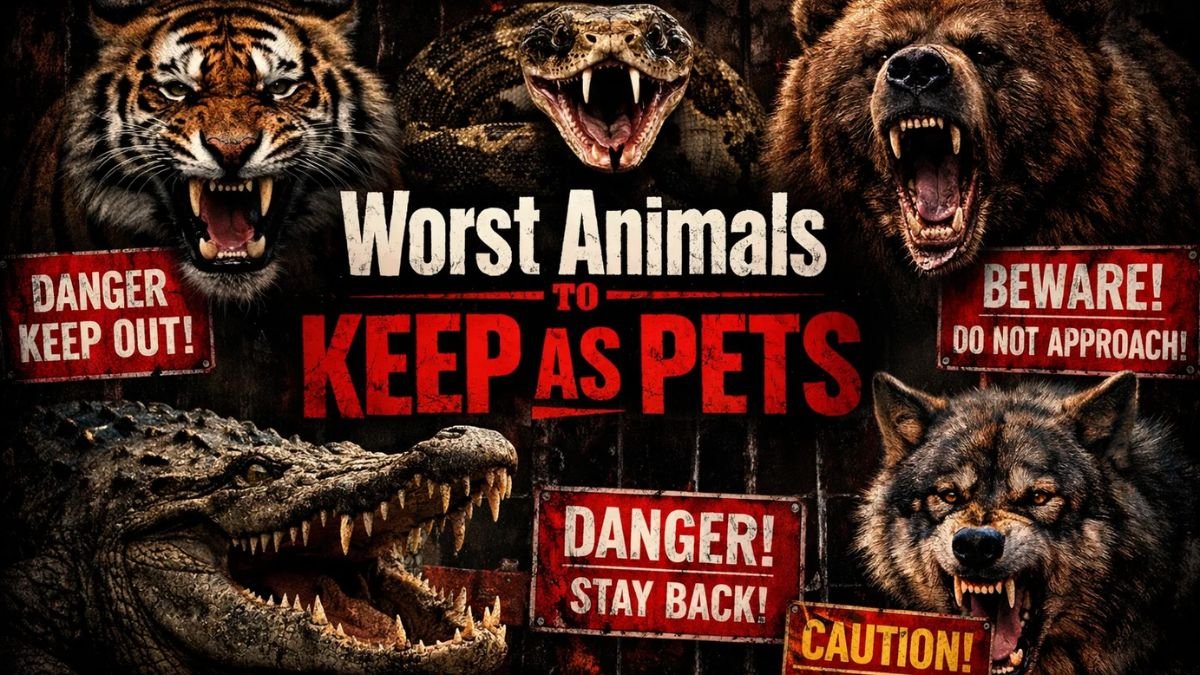
Keeping a pet is often associated with joy, companionship, and emotional comfort. But not every creature is meant to live inside a home, and some animals—no matter how fascinating they appear—are simply not suitable as companions. The worst animals to keep as pets are those that pose safety risks, require specialized care, or naturally thrive only in the wild. Understanding why these animals should never be domesticated can help potential pet owners make responsible and humane decisions.
Why Certain Animals Are Not Fit for Domestic Life
Every species has specific needs that must be met for it to live a healthy, comfortable life. Many animals that people attempt to keep as pets cannot adapt to home environments because they have instincts, behaviors, and biological patterns that conflict with human living spaces. Predatory instincts, territorial aggression, nocturnal habits, and high physical activity levels are just some of the reasons certain animals struggle outside their natural habitats. When these needs aren’t met, it leads to stress, behavioral problems, and sometimes dangerous outcomes for both the animal and its owner.
Wild Instincts and Unpredictable Behavior
One of the strongest arguments against keeping unsuitable pets is the unpredictability of wild behavior. Animals like big cats, primates, and certain reptiles may appear calm at times, but their natural instincts can surface suddenly. Even well-trained wild animals cannot entirely suppress their survival instincts. This unpredictability makes them risky, as they may react aggressively if frightened, hungry, or startled. Furthermore, their physical strength can easily overpower humans, creating dangerous situations.
Specialized Care and Environmental Needs
Many exotic or wild species require conditions that are nearly impossible to recreate at home. Temperature-controlled habitats, expansive roaming spaces, and species-specific diets are essential for their well-being. Without this meticulous care, animals can become sick, stressed, or lethargic. Unfortunately, many people underestimate the level of commitment and resources needed to keep such pets healthy. As a result, the animal suffers, and the owner often realizes too late that the decision was impractical.
Health Risks and Legal Concerns
Another reason certain animals make the worst pets is the potential health hazard they pose. Some species carry diseases or parasites that can be transmitted to humans. In addition, many regions have strict laws regarding ownership of exotic species due to the dangers they pose and the risk of disrupting local ecosystems if they escape or are released. Lack of awareness about legal responsibilities can lead to severe penalties for owners.
Conclusion
While the idea of owning an unusual animal may be intriguing, it often comes with far more challenges than rewards. The worst animals to keep as pets are typically those that cannot thrive in captivity, pose safety risks, or demand specialized care beyond what most households can provide. For the well-being of both humans and animals, it is always best to choose pets that are domesticated, safe, and capable of living comfortably within the boundaries of a human home.
FAQs
Q1. Why are some animals considered the worst pets?
Because they are dangerous, hard to control, and require special care that most people cannot provide.
Q2. Are exotic animals safe to keep at home?
Most exotic animals are unsafe due to unpredictable behavior and high risk of injury.
Q3. What makes wild animals bad pets?
They are not domesticated, can be aggressive, and need natural environments to survive.
